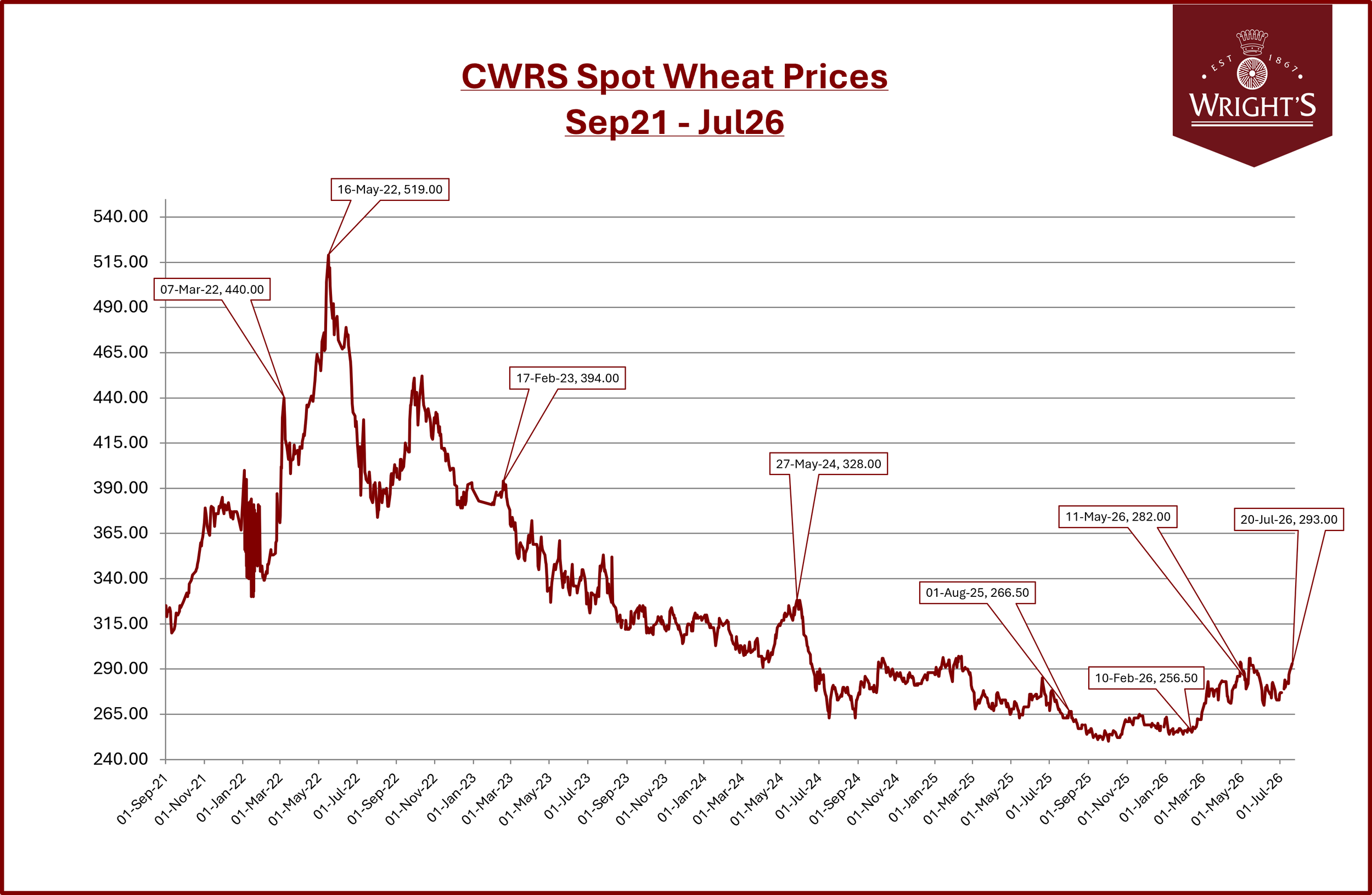
Wheat Market Update - Harvest Commences

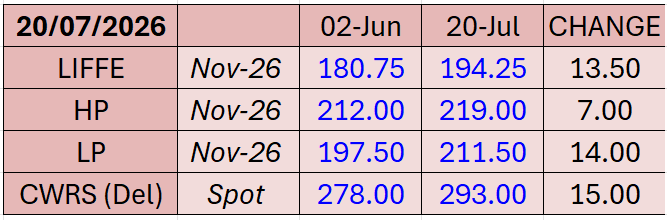
Market Drivers
Bullish Factors
Exporter stocks decline sharply in 2026/27
Re-escalation in Iran-US, Russia-Ukraine tensions
Weather: EU, US heat/ El Nino threat
Bearish Factors
Comfortable end-2025/26 major exporter wheat stocks
Harvest pressure
Middle East/ North Africa harvests shrink import needs
Executive Summary
📉 Sentiment Indication: Revived Russia-Ukraine hostilities have revived doubts over Black Sea grain export.
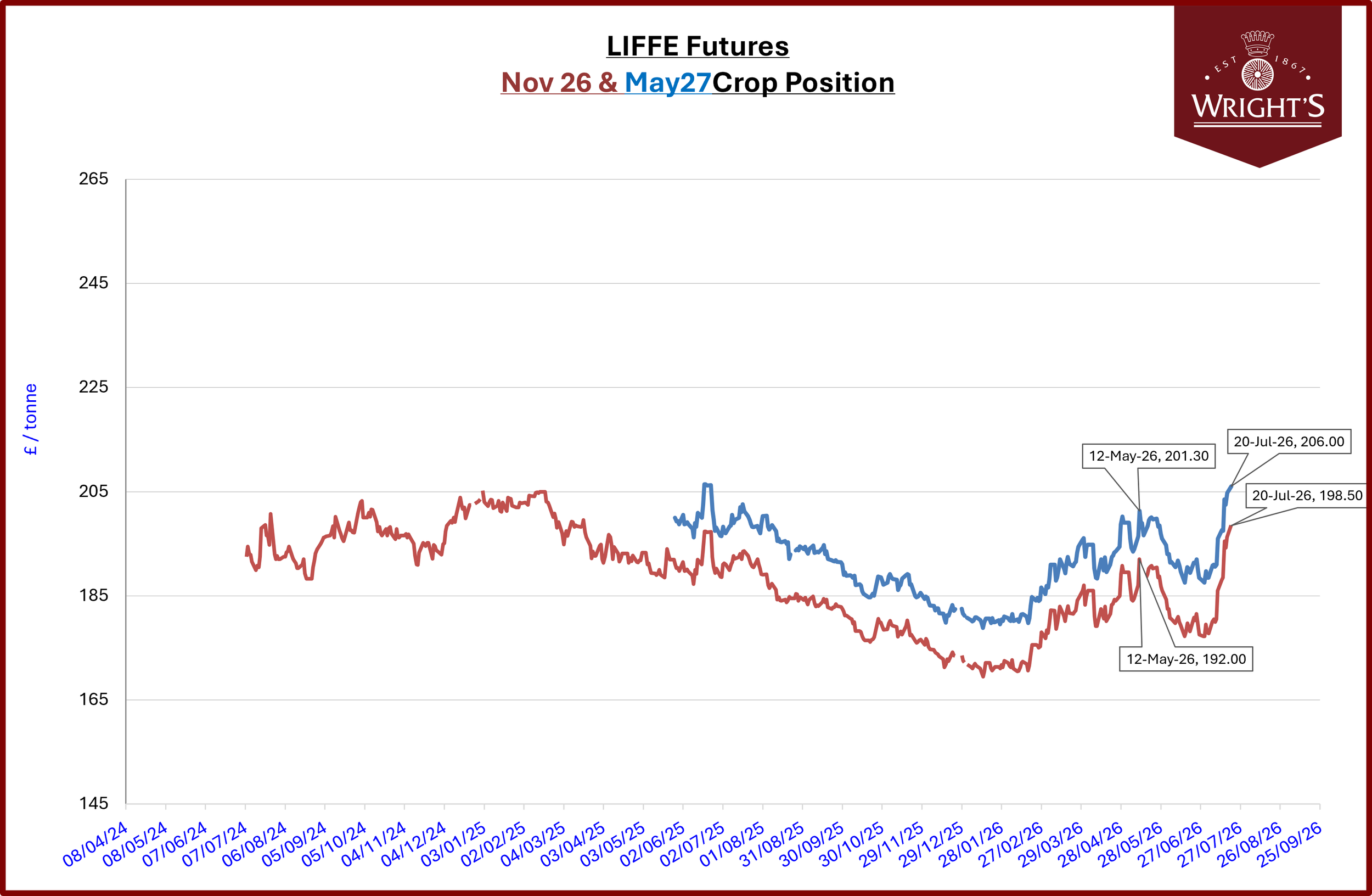
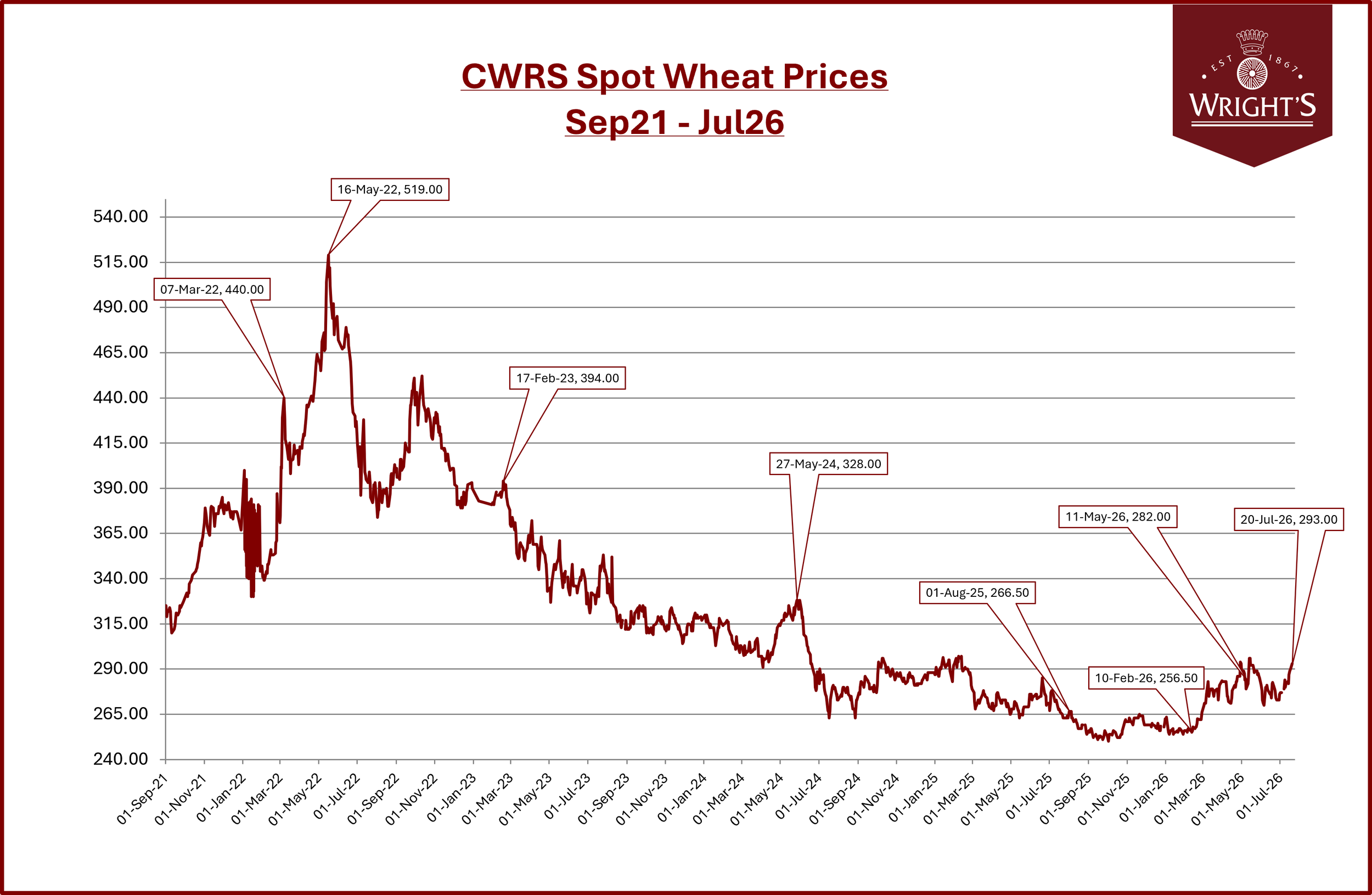
Alongside concerns over heat damage to European and US crops, and the re-escalation of Iran-US tensions, the Black Sea worries have provided cause to inject a risk premium into prices, countering pressure from northern hemisphere harvests.
Tightening balance sheets, weather threats, and geopolitical uncertainty continue to point to higher export prices ahead. However, large carryover stocks and harvest availability will keep prices in check for now.
Market update
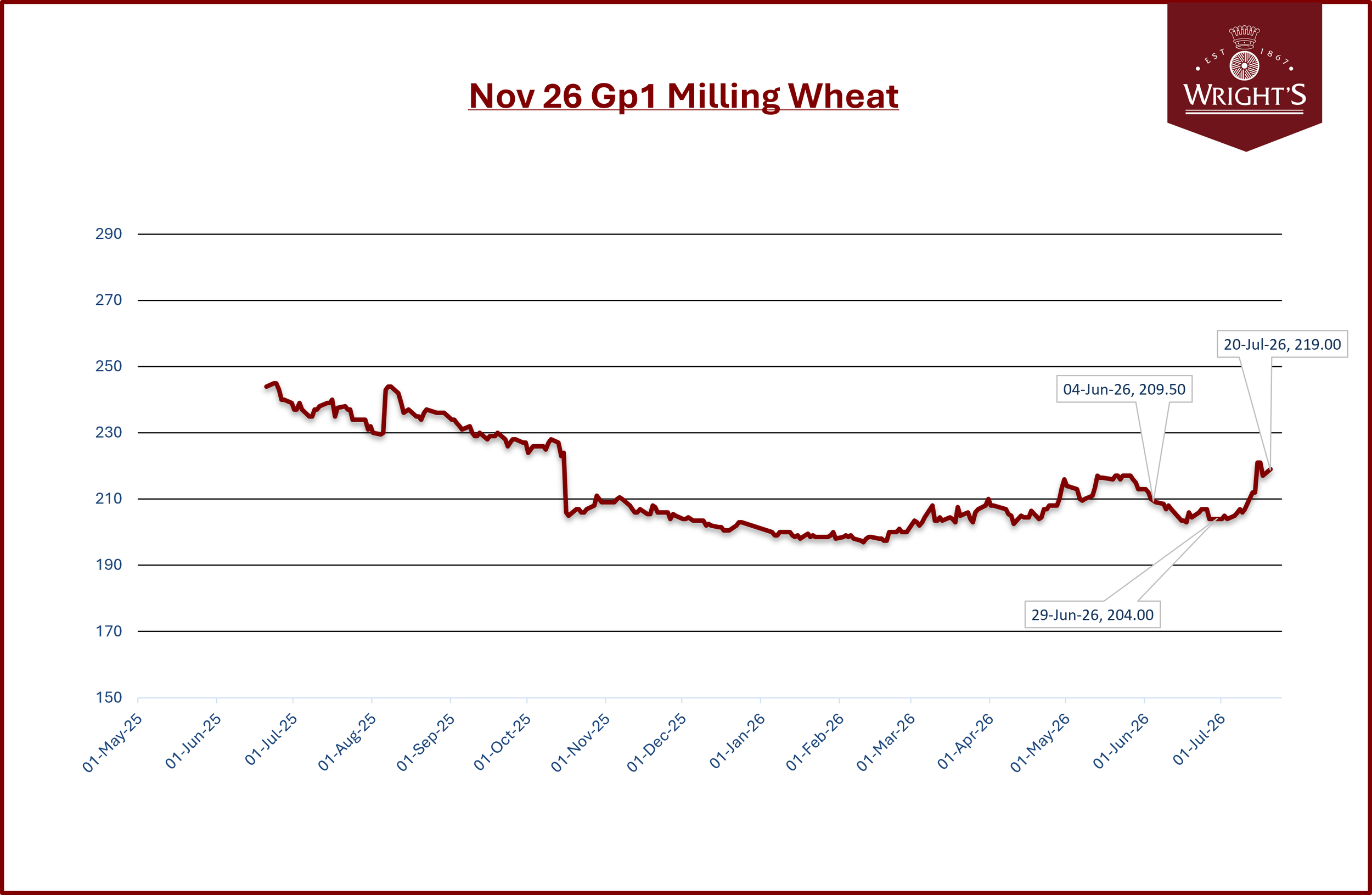
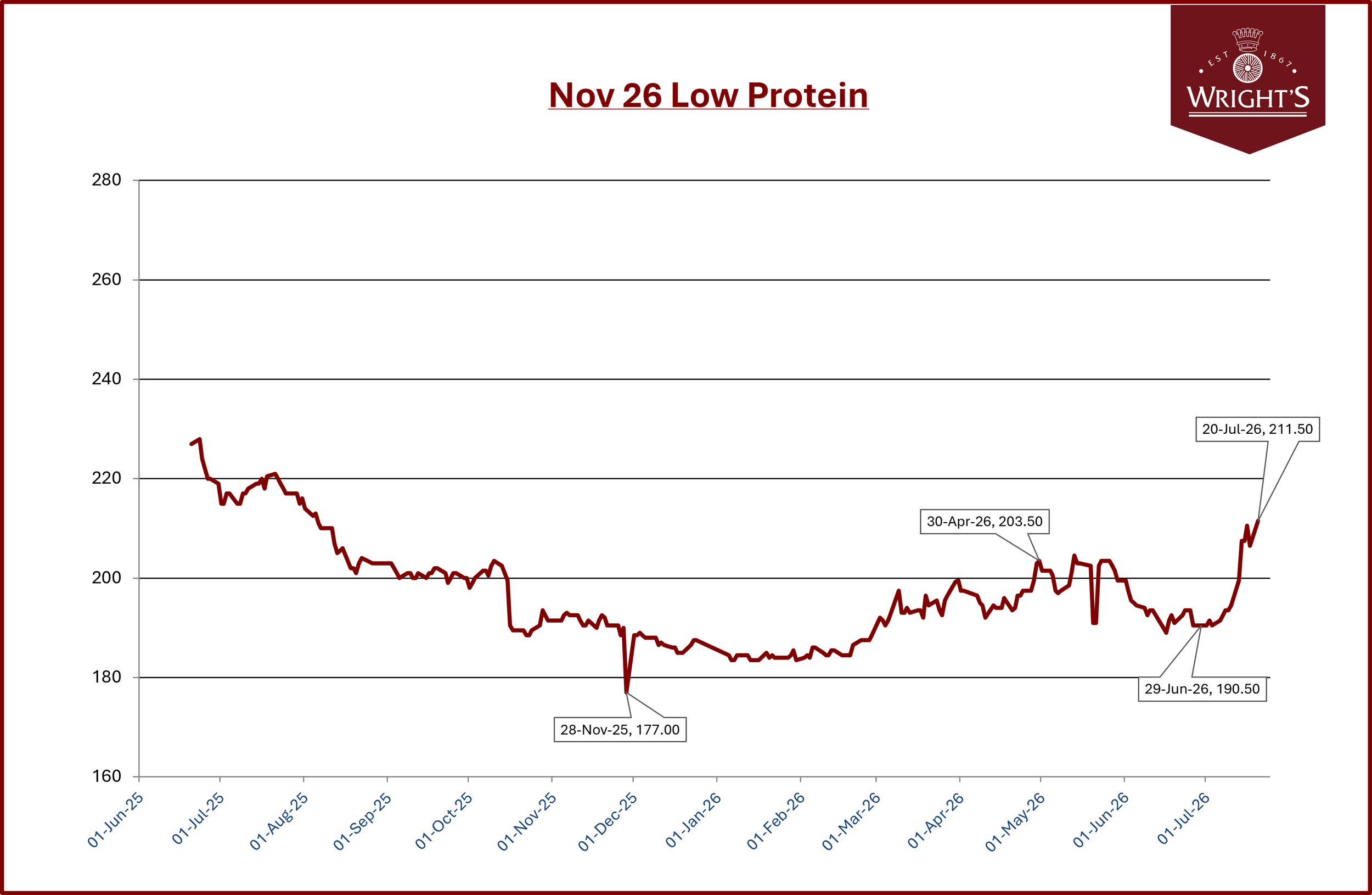
The UK wheat harvest is so far showing excellent quality, with high specific weights, low moisture, and higher-than-average protein levels. East Anglia is so far showing slightly poorer yields than other parts of the UK, which saw more rainfall in April and May. Milling premiums have come under pressure from the high pass rate, although they could be supported after harvest by the size of the UK crop.
Escalating Russia–Ukraine hostilities have reopened an old wound in grain markets.
When Russia invaded Ukraine in 2022, alarm over logistical disruption in two of the world's top grain exporters was ultimately eased by two things: some decent harvests elsewhere (including Australia's first 40Mt crop) and the UN-brokered accord between Kyiv and Moscow that protected agricultural shipments.
No such comfort is on offer this time. Grain has returned to the front line of the conflict — dry bulk vessels, even those loaded with crop, have been targeted — reviving jitters over shipments from two countries that between them account for some 30% of world exports.
In Russia, the top wheat exporter, the concern is at least contained: it centres on supplies passing from the Azov Sea into the Black Sea via the Kerch Strait, which represents 25–40% of the country's total shipments. Novorossiysk, its key Black Sea port, is reportedly still operating as normal.
But there is no sign of a 2022-style deal to protect grain flows — whether from the Azov Sea or from Ukraine's Odesa complex, near which a Guinea-Bissau-flagged ship carrying corn was struck by three Russian cruise missiles on Sunday. Nor is there any guarantee the conflict will not spread to further facilities.
The result: geopolitical fear is currently trumping harvest pressure in setting prices.
The irony is that Russia and Ukraine had looked set to apply particular seasonal pressure to values, as the only two major exporters heading for harvests near bumper 2025 levels. Heat and dryness have crimped EU wheat crops and ravaged US ones, while reduced sowings have dented prospects in Argentina and Canada — and in Australia, where the risk of El Niño-inspired dryness remains live.
El Niño and the wheat market — what it means. El Niño is a periodic warming of the tropical Pacific Ocean that occurs every few years and shifts rainfall patterns around the globe for a season or two. Its significance for grain supply lies in the areas it tends to bring drought: most notably across Australia, a major wheat exporter, as well as parts of South and Southeast Asia and southern Africa. A strong El Niño, therefore, raises the risk of reduced harvests in key growing regions, which can tighten global wheat availability and add upward pressure to prices. It's worth stressing that El Niño shifts probabilities rather than guaranteeing outcomes; each event varies in strength and timing, and other factors influence the final picture