
I. Executive Summary
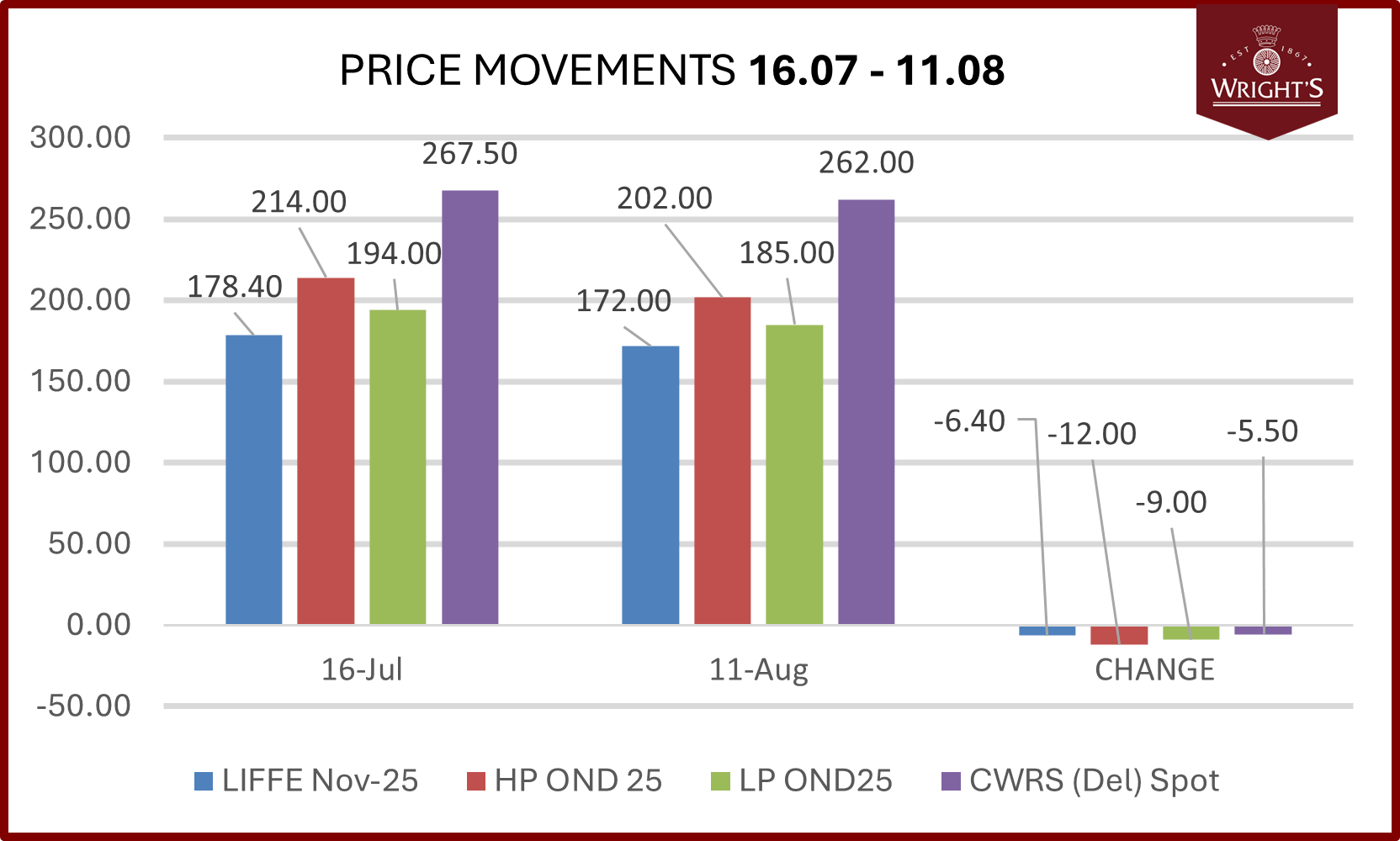
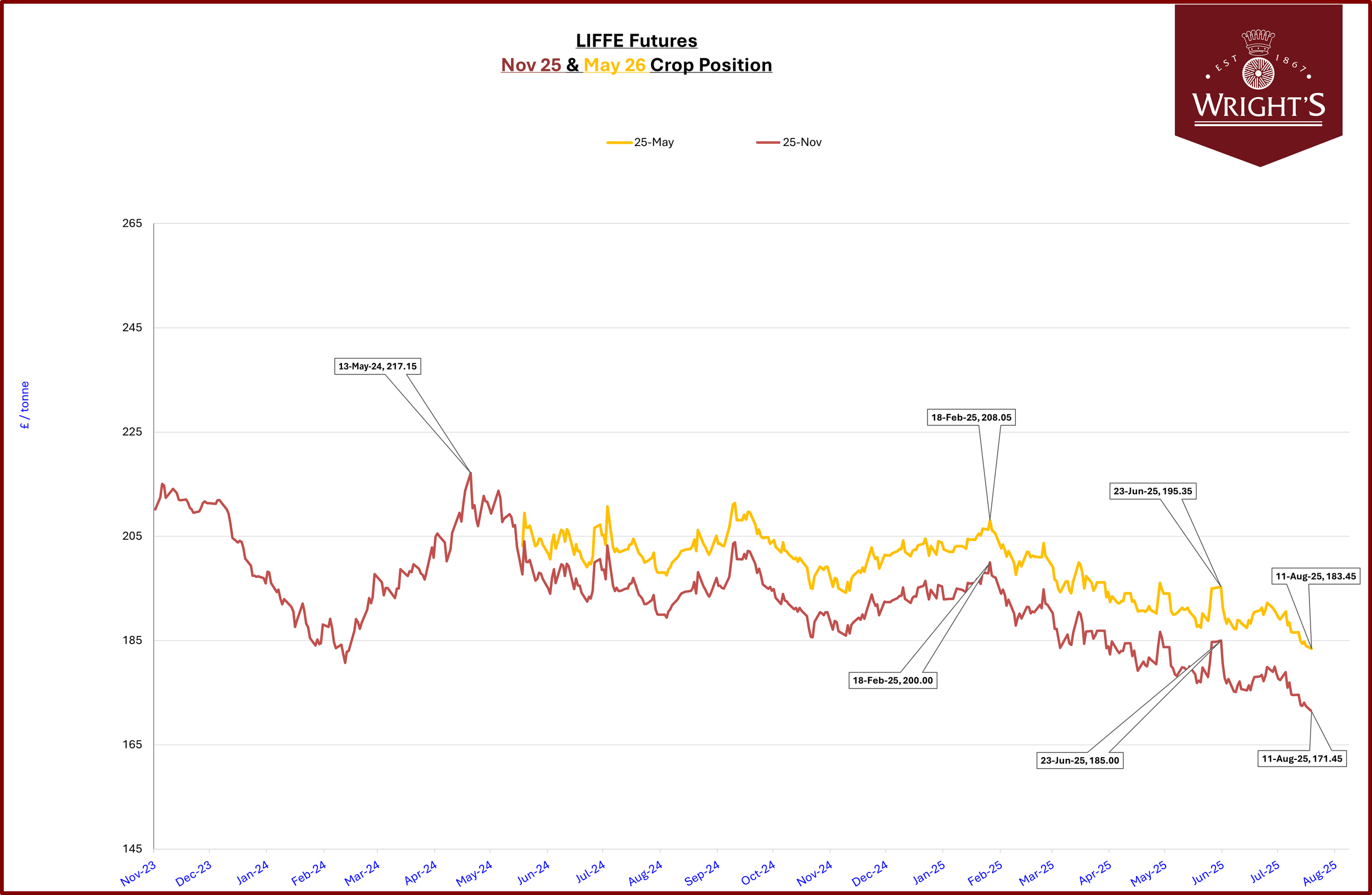
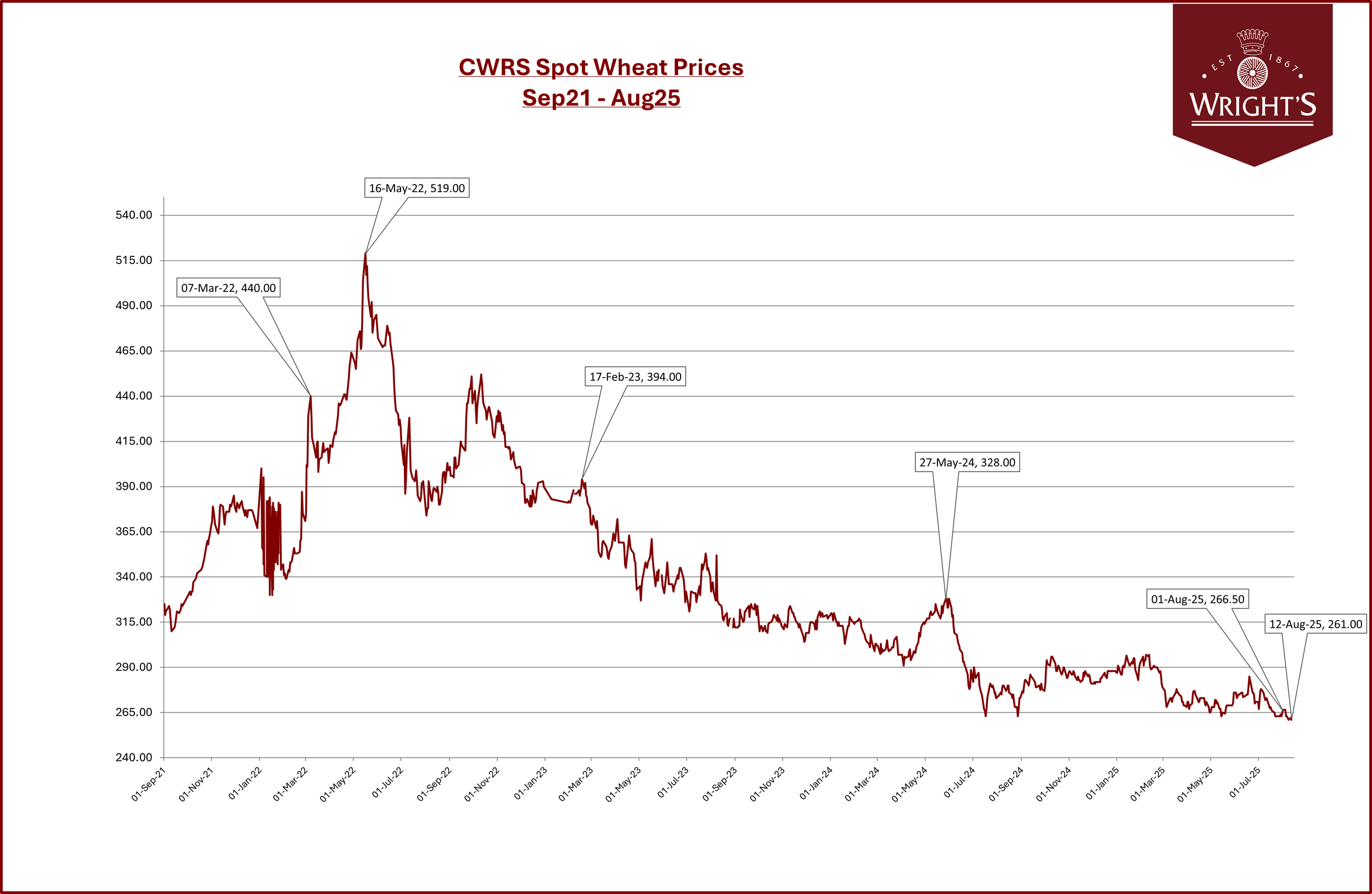
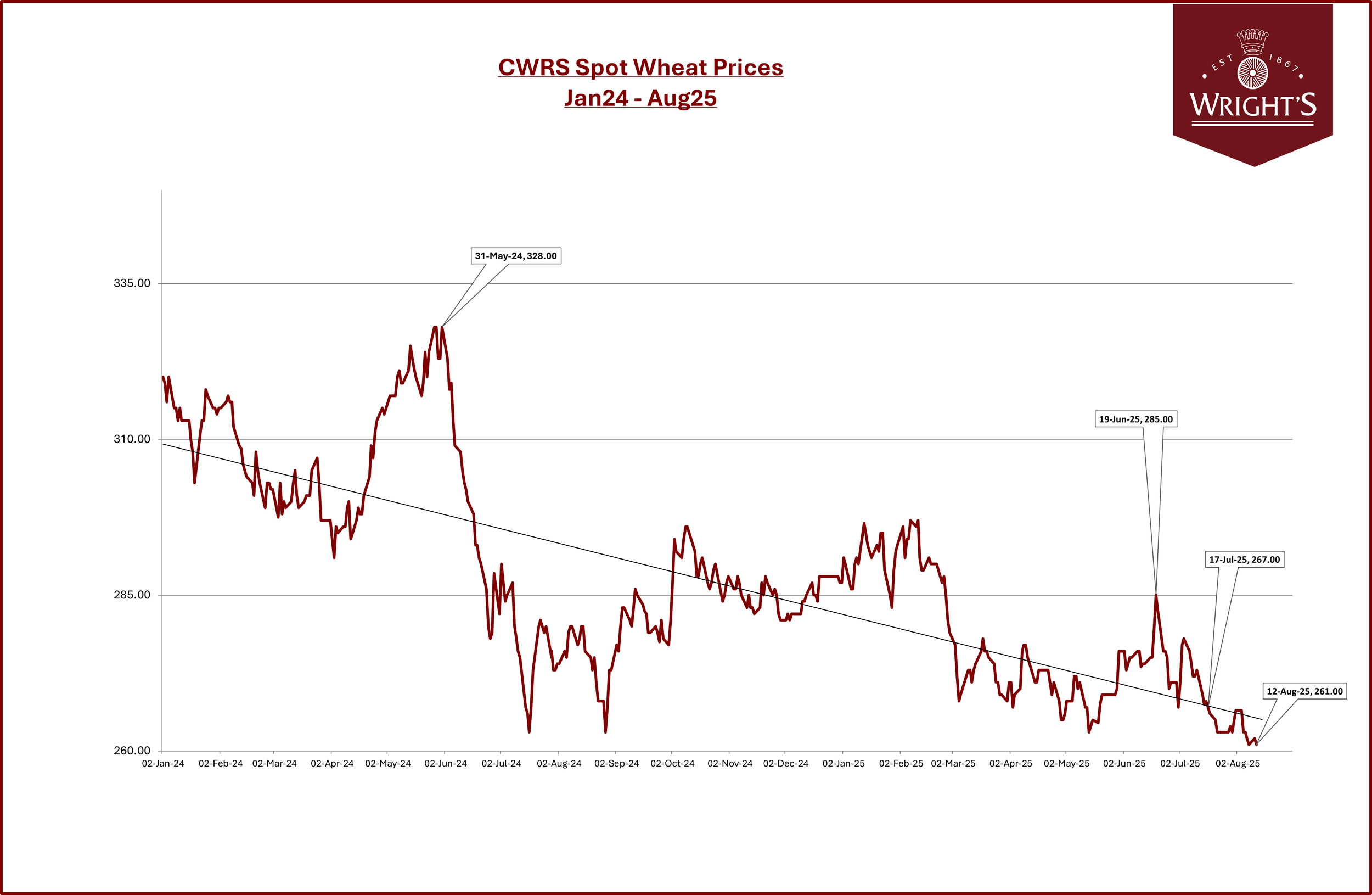
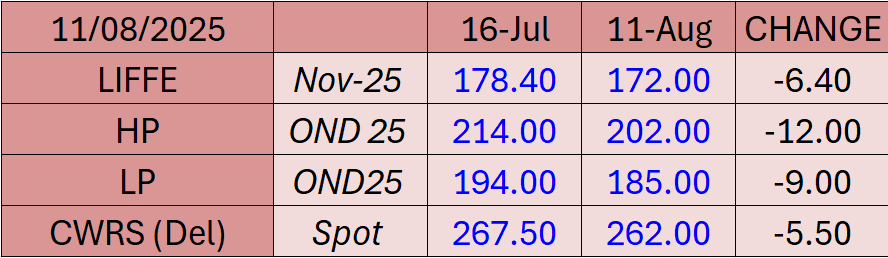
Harvest is advancing in the UK, although there have been delays due to inclement weather, with early samples showing good protein and solid hectolitre weights. Regions with better soil continue to outperform those affected by dry conditions. Nov 25 London wheat futures closed the week at £172.40 with Nov 26 at £ 187.30. Across the globe, futures prices have mostly eased since mid‑July, with Chicago (CBOT) sliding most prominently. ICE and MATIF futures in the UK and EU have been steadier, thanks partly to support from local supply dynamics and currency shifts. Autumn plantings in the northern hemisphere are the next fundamental factor that could change the supply and demand outlook.
Update: 13.05.25
The latest USDA WASDE has just been released with a significant increase to US corn production numbers, in what is seen as a generally bearish report. This has helped push markets down further this morning.
II. UK Market Focus
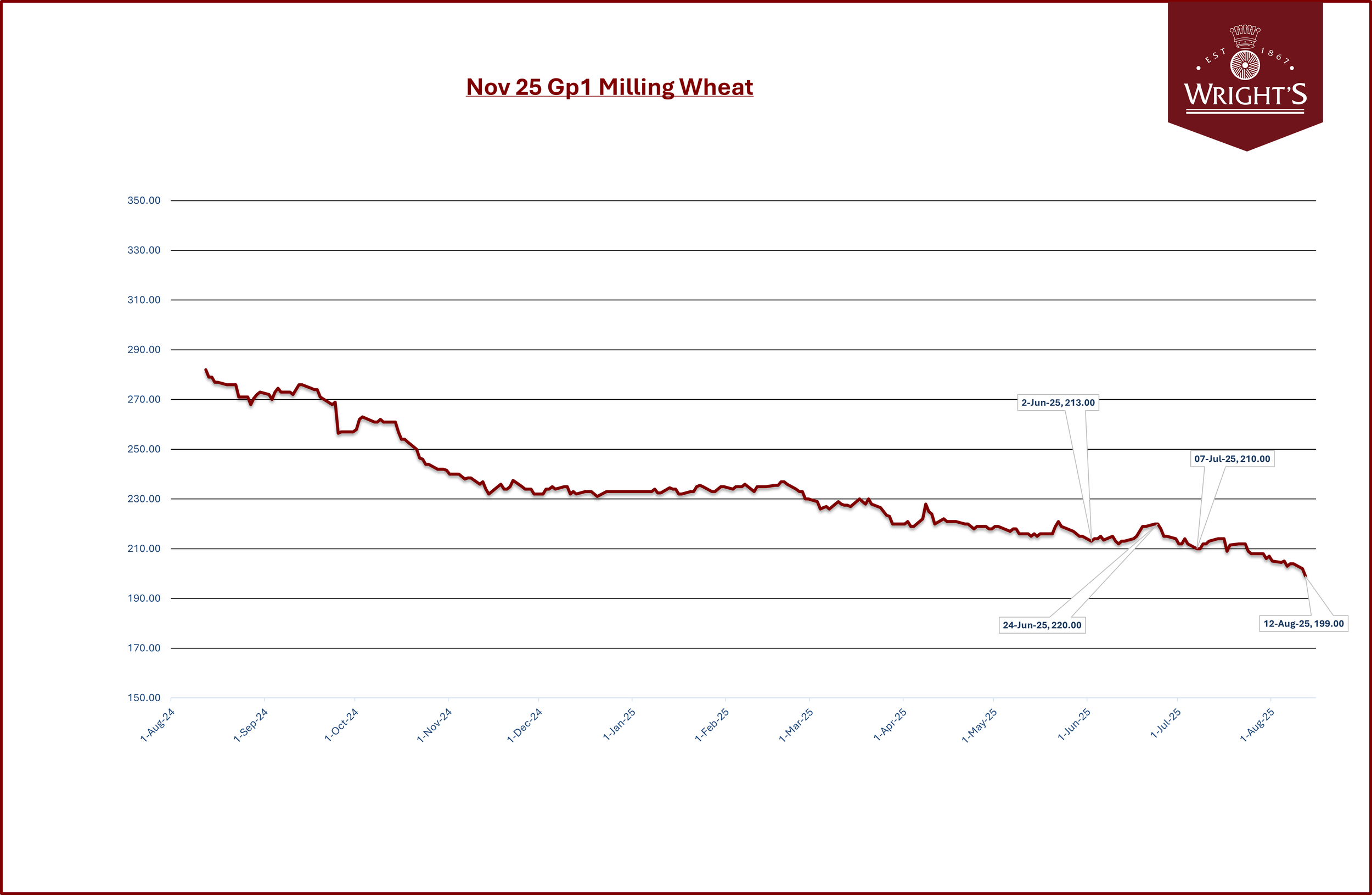
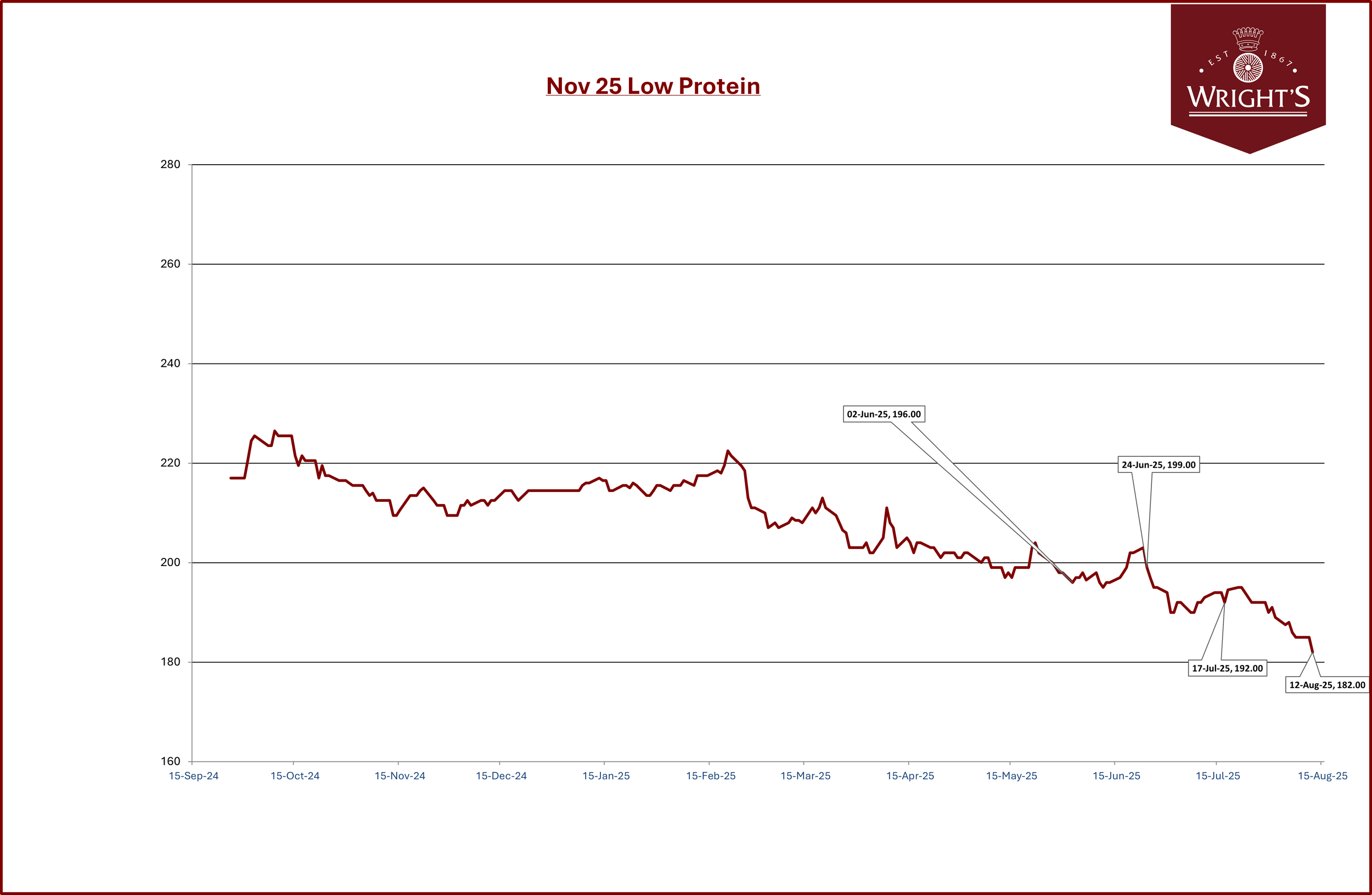
As of the 6th August, the winter wheat harvest had reached 48% completion, up from 11% a fortnight previously. Harvest is now complete for those reporting in Wales, and is 82% complete in the South West. Meanwhile, the regions with the slowest progress are Northern Ireland, the North East, and the North West. Yield is variable depending on the type of land. Heavier lands that have held the most moisture have the highest yields; generally, those on lighter ground have seen yields hit by a lack of rainfall in the spring. Overall, proteins are looking strong, with averages on Group 1 Milling wheat hitting the 13.5% average mark. Hectolitre weights are also looking good, with averages being reported at 79 kg/hl. Milling wheat premiums have drifted lower as virtually all samples are making the grade
Group 1 Milling Wheat
Specific weight – Initial specific weights are good, with a high of 84 kg/hl reported in one case, and an average of 79 kg/hl.
Hagberg Falling Number (HFN) – Hagberg Falling Numbers are generally above 300 seconds, however with the recent rainfall in some Group 1 samples HFNs have dropped closer to 200 seconds.
Protein – Protein currently looks good, with protein levels in Group 1 samples averaging 13.5%.
Moisture – Winter wheat moisture levels are up on the previous report, owing to harvest taking place around showers. The average moisture level is reported as 15.0%, ranging from 12.2% to 17.0%.
Currency note:
The British Pound has shown notable strength against the US Dollar over the last several weeks. The GBP/USD exchange rate rallied from the $1.2750 level in late July to a multi-week peak of approximately $1.2930 by the second week of August, driven by speculation regarding the Bank of England's future monetary policy.
For UK millers and other businesses reliant on dollar-denominated imports, this appreciation offers a tangible benefit. The increased purchasing power of sterling directly reduces the cost of commodities like wheat, thereby easing pressure on input costs.
III. Global Wheat Outlook
The global wheat market over the past four weeks has been shaped by a mixed and challenging supply outlook. While the Northern Hemisphere harvest is progressing, significant weather-related issues in several key producing regions have tightened supply forecasts and introduced considerable uncertainty into the market.
In North America, the US winter wheat harvest is nearing completion under generally favourable conditions, with most yields described as average to good. However, the focus has shifted sharply to the spring wheat crop. Persistent dryness and above-average temperatures across the US Northern Plains and Canadian Prairies have led to a decline in crop condition ratings. As a result, analysts have trimmed yield potential, a factor that has provided underlying support for Minneapolis (MGEX) spring wheat futures.
In the EU, the harvest has been challenging, and early results from major producers like France and Germany are pointing toward disappointing yields, which are not expected to surpass last year's levels. A combination of a wet planting season followed by summer dryness has stressed crops and led analysts to downgrade EU production forecasts. This has applied upward pressure on Paris-based MATIF futures.
In the Black Sea region, Russia continues to exert significant influence, exporting wheat at highly competitive prices that weigh on global values and challenge other origins. Ukraine’s export corridor remains operational and a critical source of supply, though shipments continue to face risks associated with the ongoing conflict, adding a persistent layer of volatility to the market.