Wheat Market Update - 28th September 2026

| Instrument | Prev close | As of today (Mon 28 Sep) | Change |
|---|---|---|---|
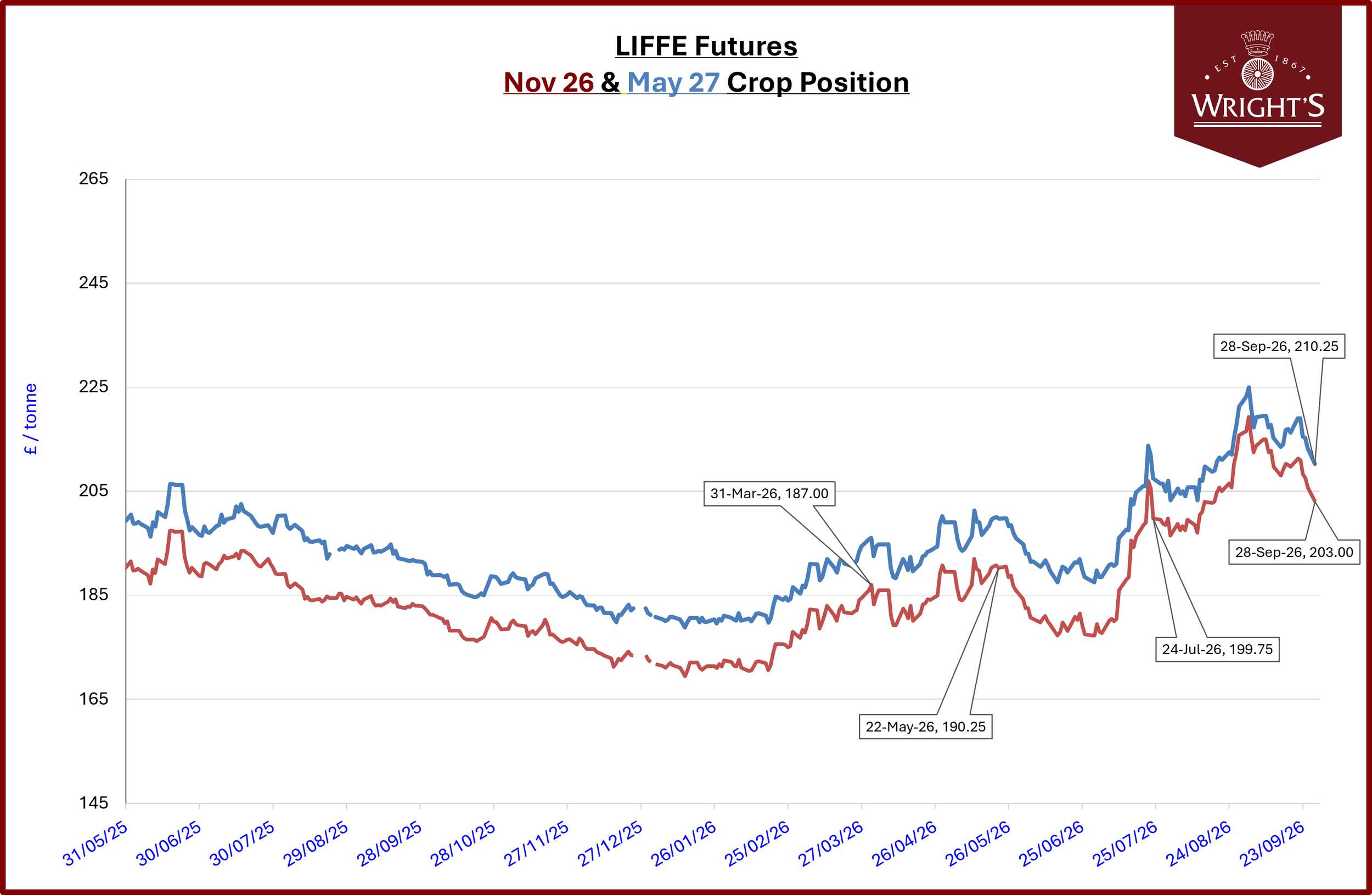
| ICE UK feed wheat — front month (Nov-26)* | £207.50/t | £205.75/t | −£1.75 (−0.8%) |
| ICE UK feed wheat — Nov-26 | £207.50/t | £205.75/t | −£1.75 (−0.8%) |
| ICE UK feed wheat — May-27 | £216.50/t | £213.25/t | −£3.25 (−1.5%) |
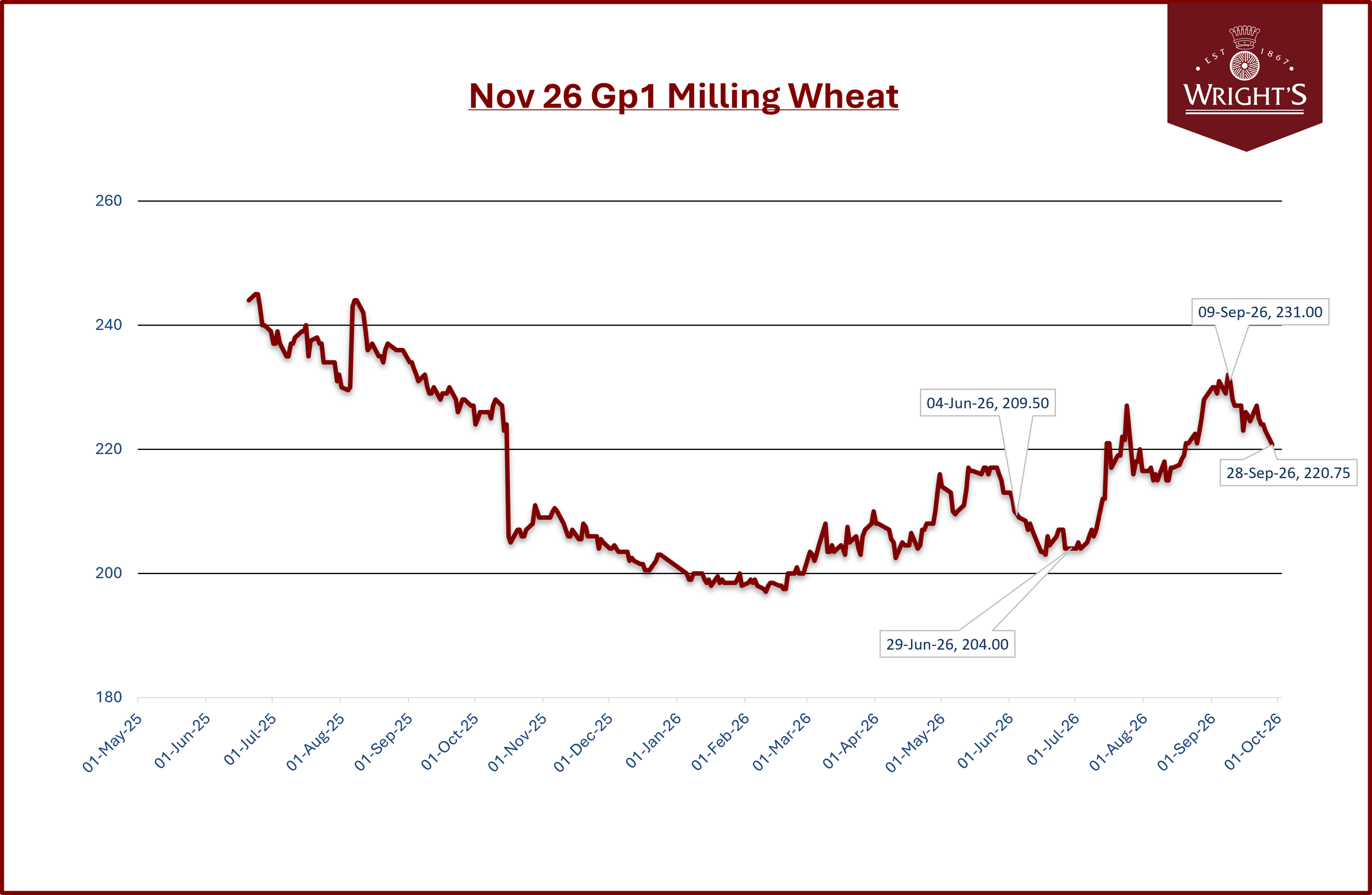
| High-protein wheat (Group 1), delivered | £224.50/t | £221.00/t | −£3.50 |
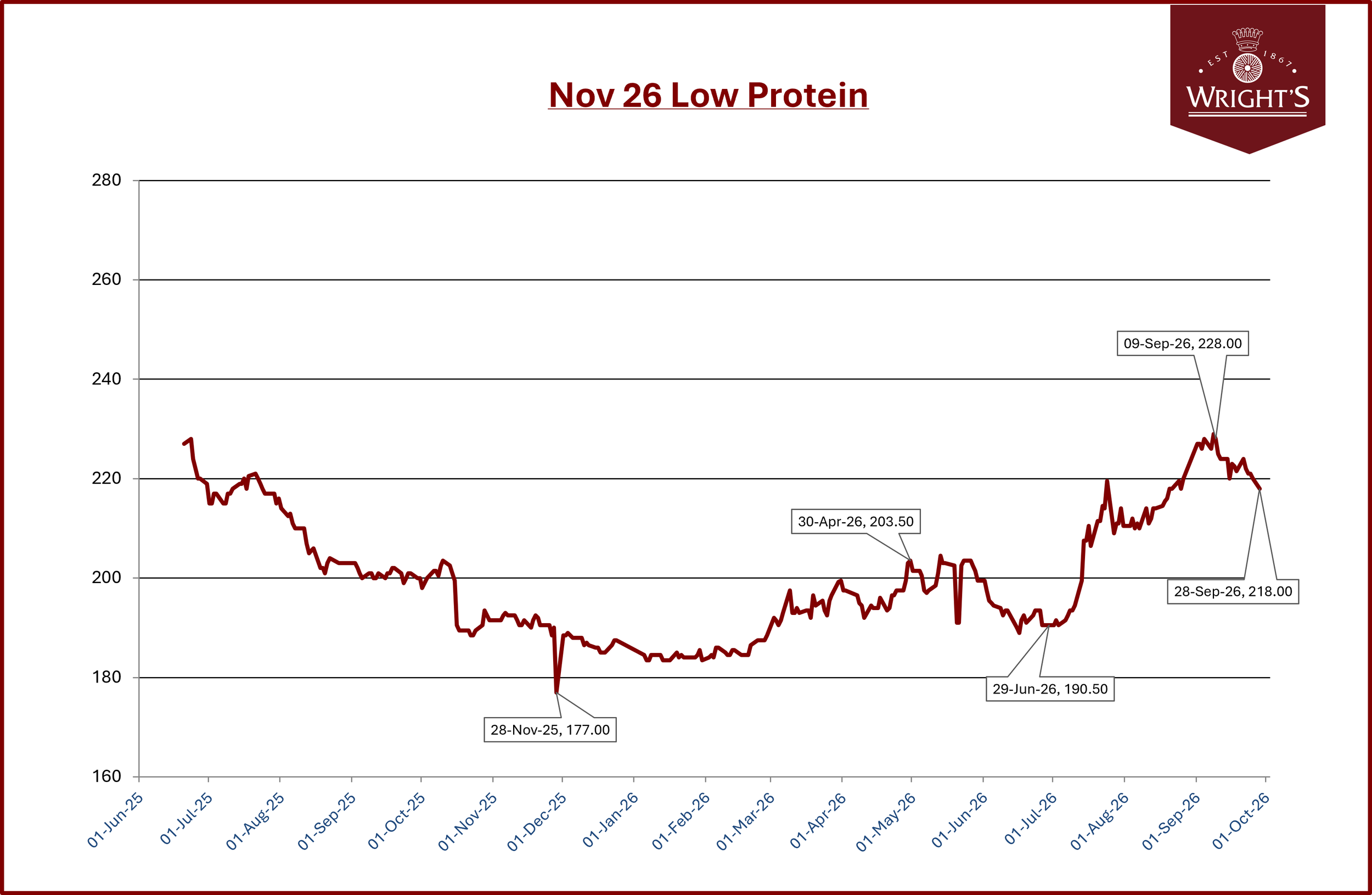
| Low-protein wheat (Lows), delivered | £221.50/t | £219.00/t | −£2.50 |
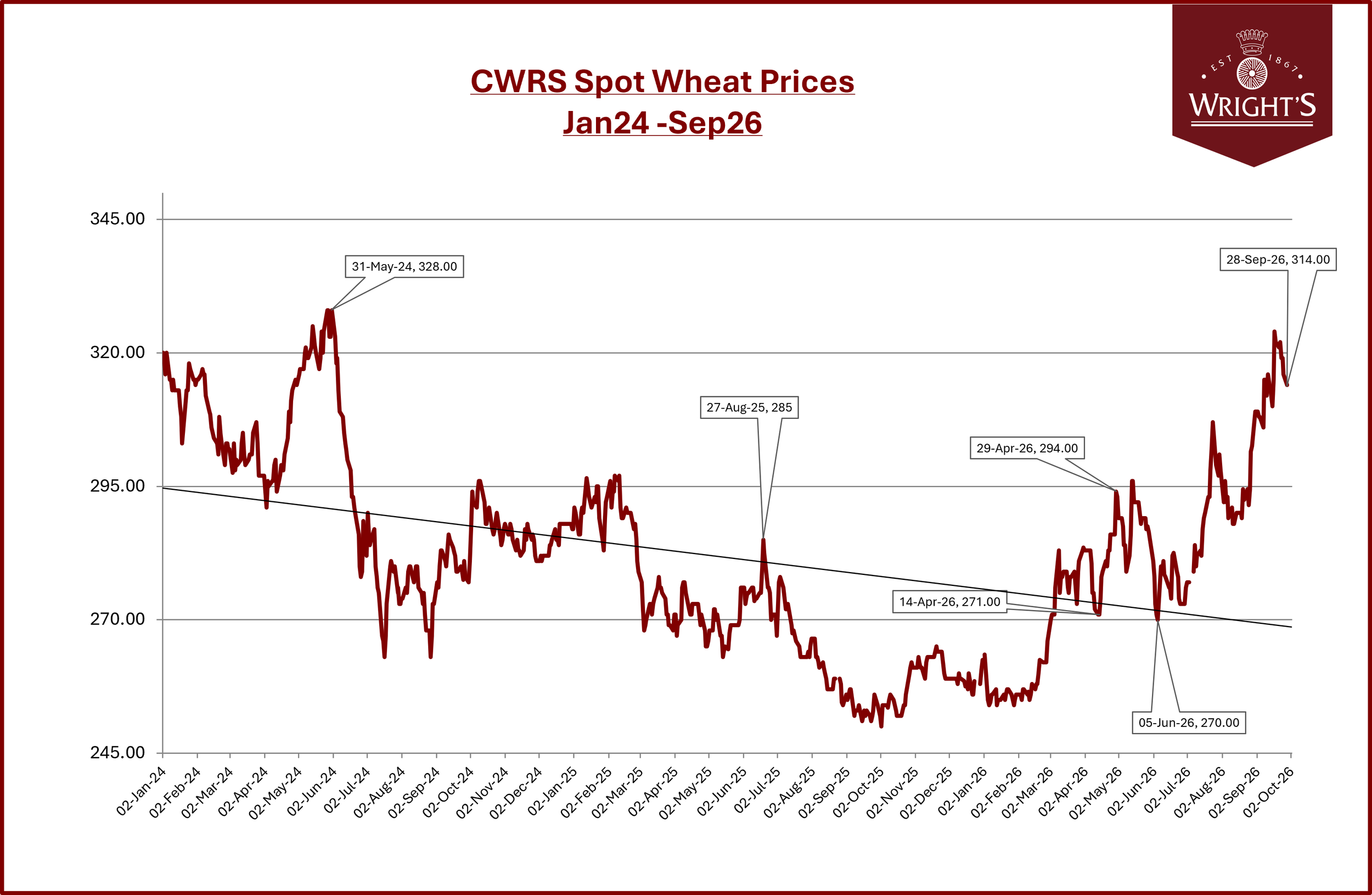
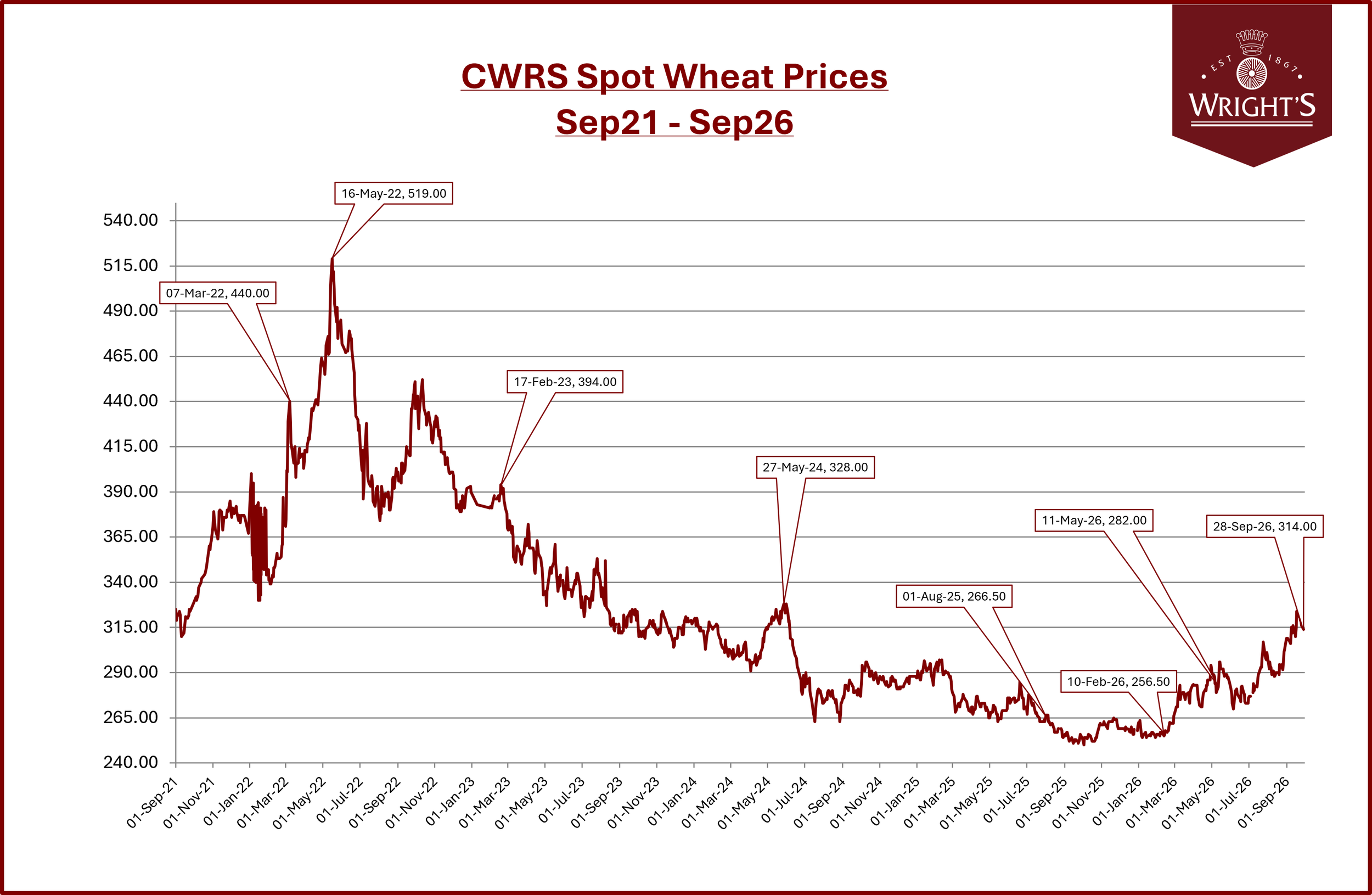
| CWRS 13.5% delivered — spot | £318/t | £316/t | −£2 |
| MATIF milling wheat — Dec-26 | €237.50/t | €235.00/t | −€2.50 (−1.1%) |
| GBP/USD | 1.3237 | 1.3260 | +0.0023 (+0.2%) |
| GBP/EUR | 1.1618 | 1.1655 | +0.0037 (+0.3%) |
Market Drivers
Executive Summary
Wheat markets drifted lower through the week of 21–27 September, handing back an early rally as Black Sea de-escalation hopes and weak US export demand outweighed supportive supply news. UK feed wheat (Nov-26) opened firmer near £211/t on Monday 22 September but eased to £207.50/t by Thursday 24 September, down from £209.75/t at the previous Friday's close. Paris milling wheat fell around €5–6 over the week, and Chicago touched its lowest level since late August. Sterling weakened against both the dollar and the euro. The tone was risk-off and range-bound, with geopolitics, rather than fundamentals, driving most of the day-to-day volatility.
Raw-material cost eased modestly over the week in both futures and delivered-import terms, with all four imported breadmaking grades down. The near-term balance is finely poised: fund liquidation on peace-deal optimism is pulling futures lower, but a weaker pound lifts the sterling cost of imports, and a smaller domestic harvest keeps milling wheat tight. On balance, this argues for patience on fresh cover while values are soft, though any breakdown in Black Sea diplomacy could quickly reverse the move.
UK Focus
ICE UK feed wheat futures (Nov-26, currently the front month) eased to £207.50/t by Thursday 24 September, from £209.75/t at the 18 September close, after briefly trading up to around £211/t early in the week. Sterling softened to $1.3237 on 24 September from $1.3385 a week earlier, and to €1.1618 from €1.1660. A weaker pound raises the sterling cost of imported wheat while helping UK export competitiveness, a mixed signal for a miller that draws on both home-grown and imported breadmaking wheat.
AHDB's final 2026 harvest report, published 25 September, confirmed a disappointing campaign: wheat, spring barley and oat yields nudged up slightly on the previous update but remained well below average, with GB wheat running around 12% under the five-year average and spring barley near 4.6 t/ha. Only a small area of spring barley and some pulses were left to cut.
Global Focus
Grain markets weakened last week on softening geopolitical pressures. Black Sea diplomacy dominated the week. Hopes of a Turkish-backed truce to protect commercial shipping and of a corridor reopening encouraged fund selling, even as Russian and Ukrainian drone and missile strikes intensified; Ukraine's request for larger EU wheat export quotas was rejected, and Egypt switched purchases toward EU origins, loading a French cargo, supportive for Paris. Russian and Ukrainian winter-wheat planting was slowed by soil-moisture deficits, building area and yield risk. Australia showed early El Niño-style heat and dryness, and Argentina and Brazil were also dry. Red Sea and Hormuz shipping tensions added a layer of freight risk.
Iranian officials said they would consider allowing the reopening of the Straits of Hormuz in exchange for the US ending its naval blockade while President Zelensky told leaders at the UN that his country is ready for a limited ceasefire targeting grain and energy infrastructure and shipping based on proposals from Egypt, India and Turkey. In addition, the latest Trump/Xi summit failed to announce any further purchases by China of US agricultural products.
| Imported wheat, delivered (£/t) | 18 Sep | 28 Sep | Change |
|---|---|---|---|
| German A 13% (breadmaking) | £267/t | £260/t | −£7 |
| German E 14% (premium breadmaking) | £291/t | £284/t | −£7 |
| French min 11% | £283/t | £277/t | −£7 |
| CWRS 13.5% (Canadian) | £322/t | £314/t | −£7 |