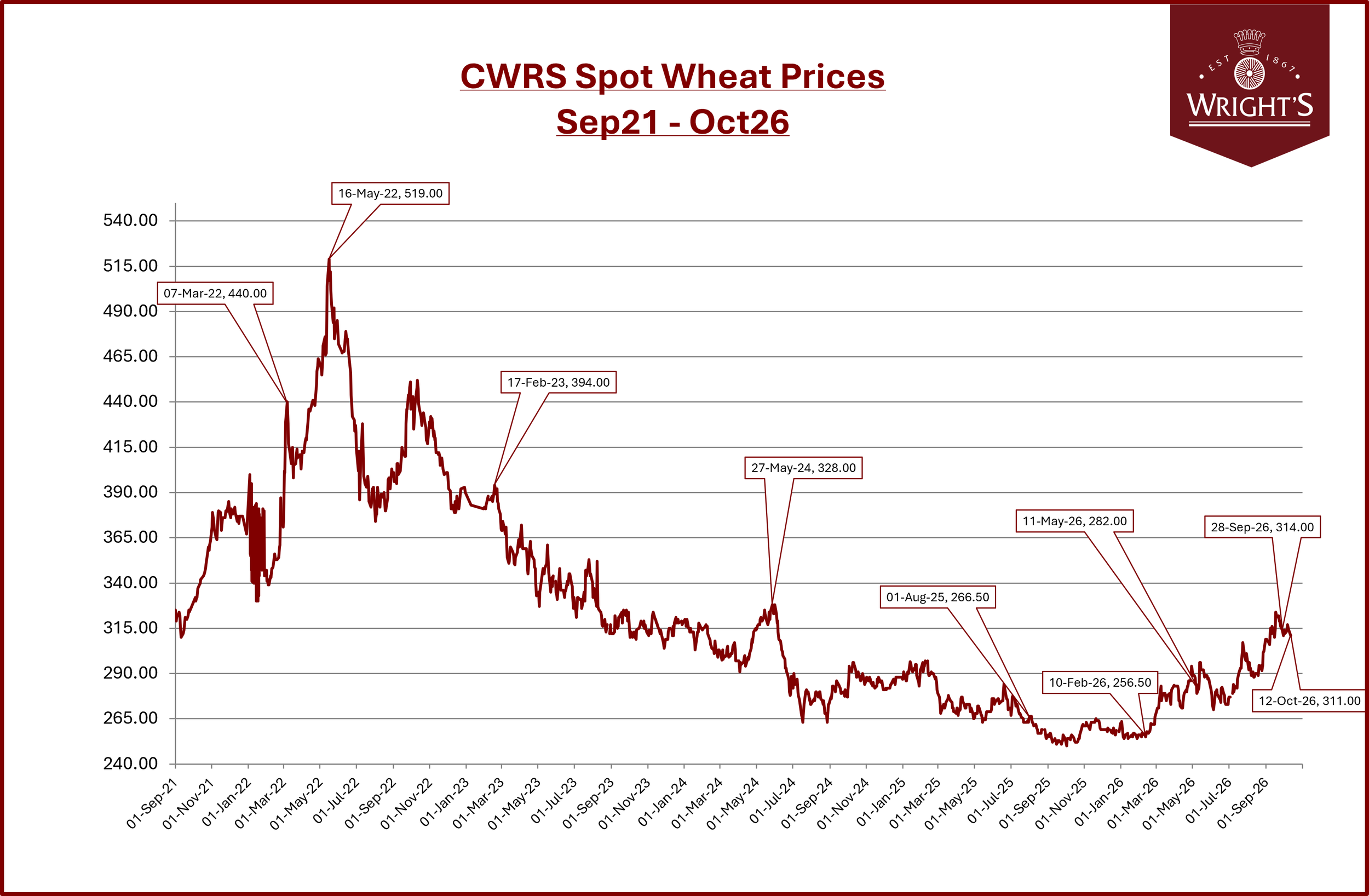

Key closes
| Instrument | Fri 23 Oct | Fri 30 Oct | Latest — 4 Nov | Change on week |
|---|---|---|---|---|
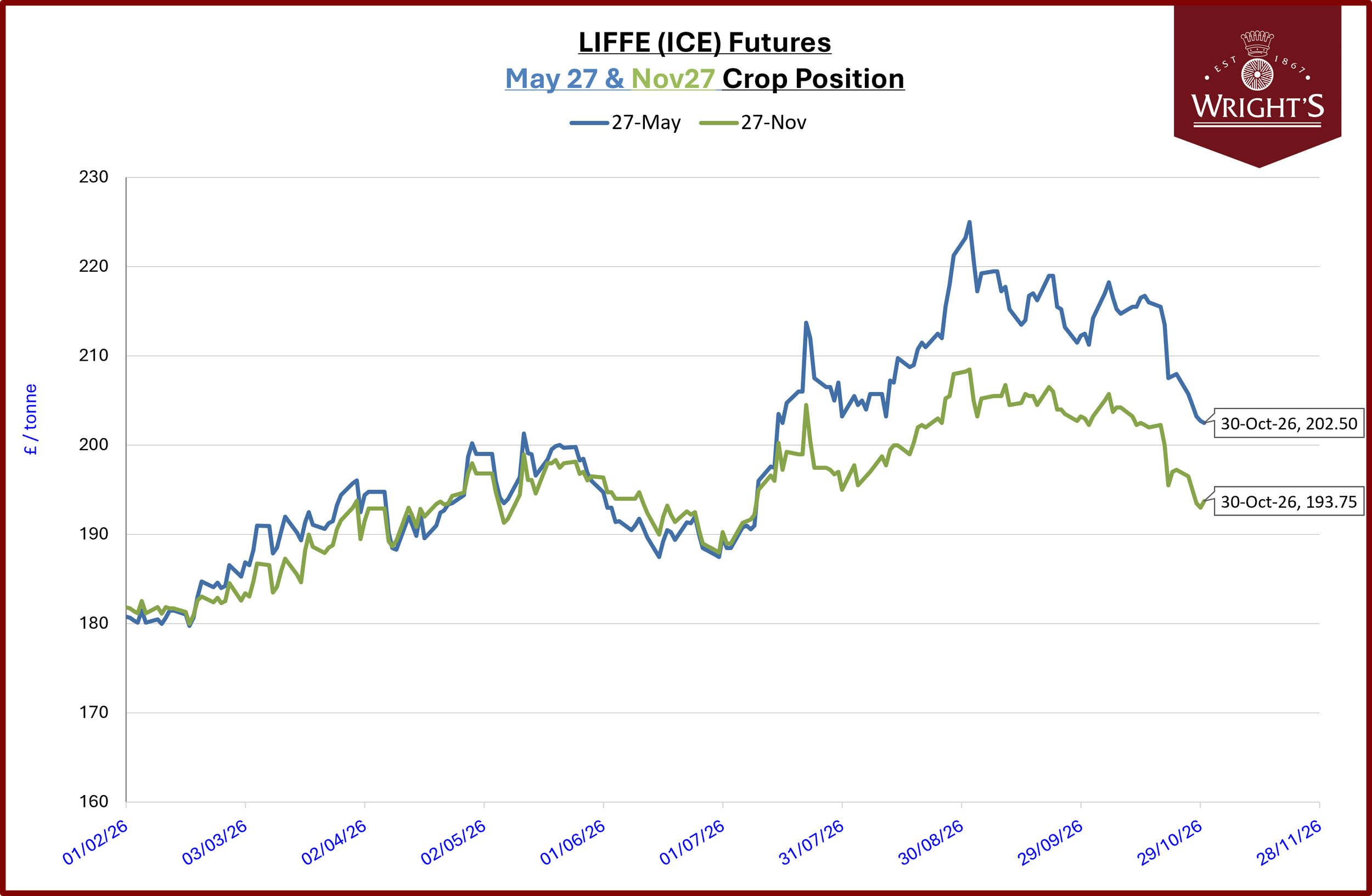
| ICE UK feed wheat — May-27 (lead contract) | £208.00/t | £202.50/t | £200.00/t | −£5.50 (−2.6%) |
| ICE UK feed wheat — Nov-27 | £199.00/t | £194.00/t | £190.00/t | −£5.00 (−2.5%) |
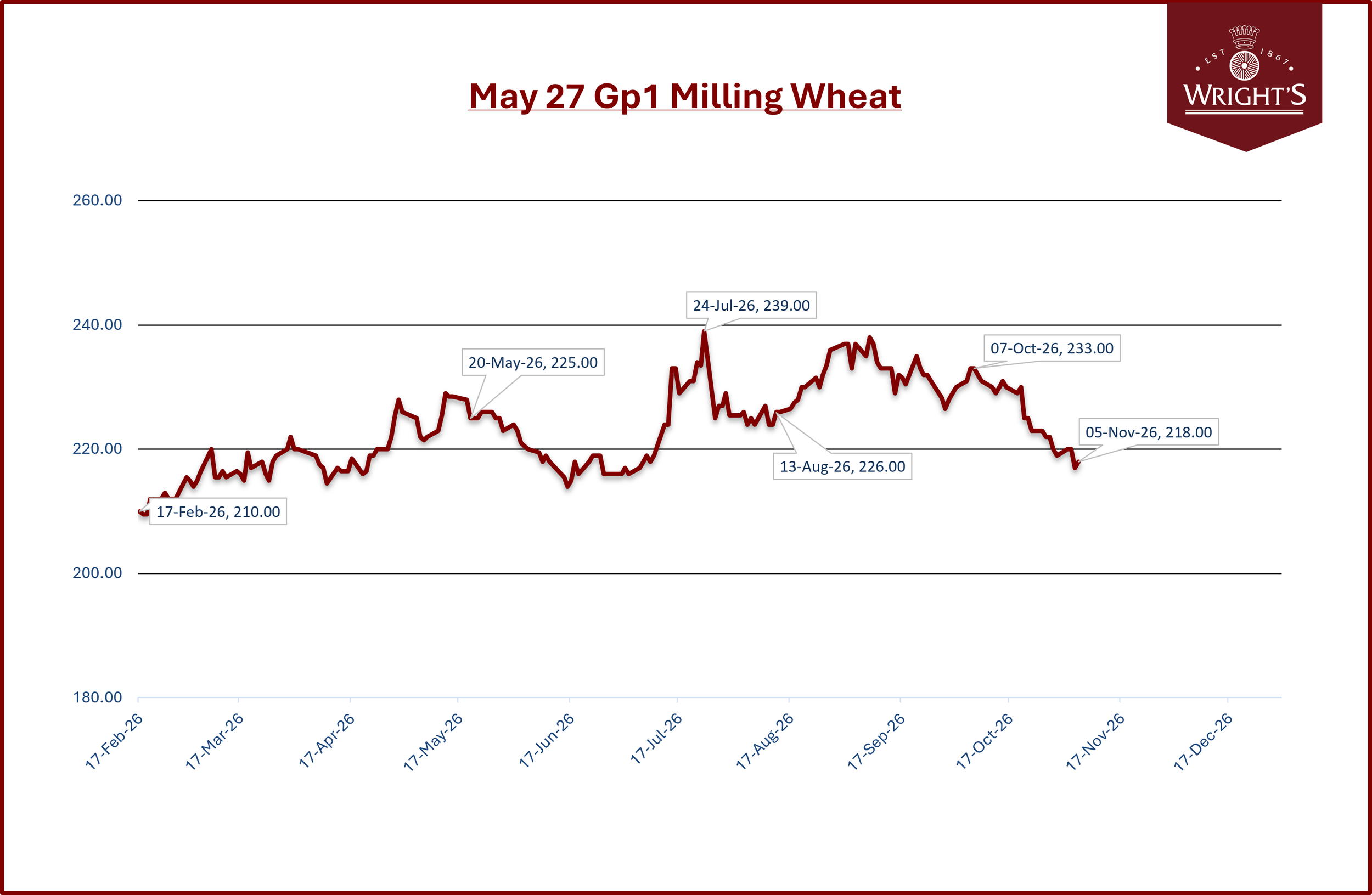
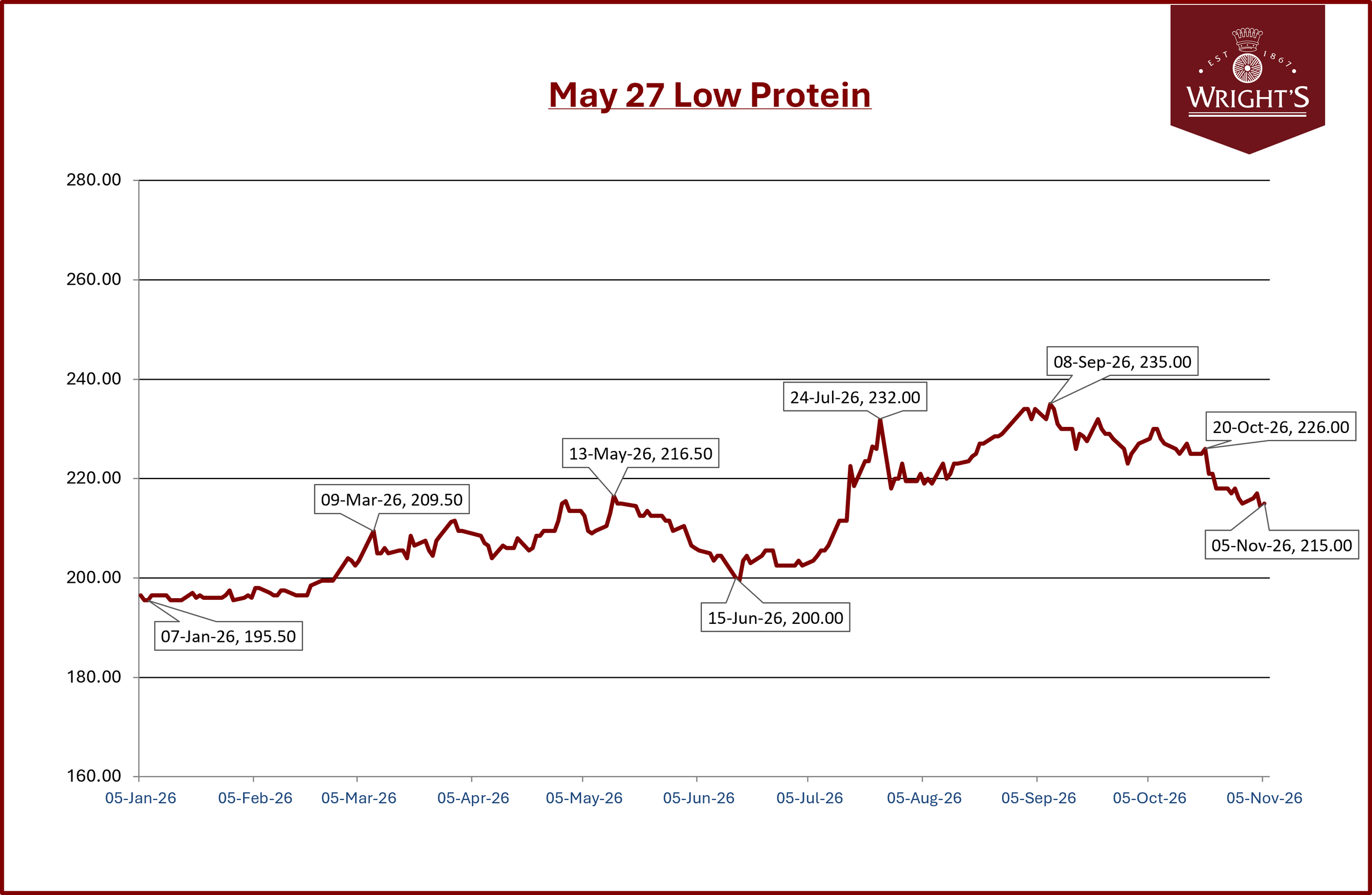
| Group 1's — full-spec breadmaking, delivered | £213/t | £209/t | £207/t | −£4 |
| Hard & Softs — milling, delivered | £208/t | £205/t | £204/t | −£3 |
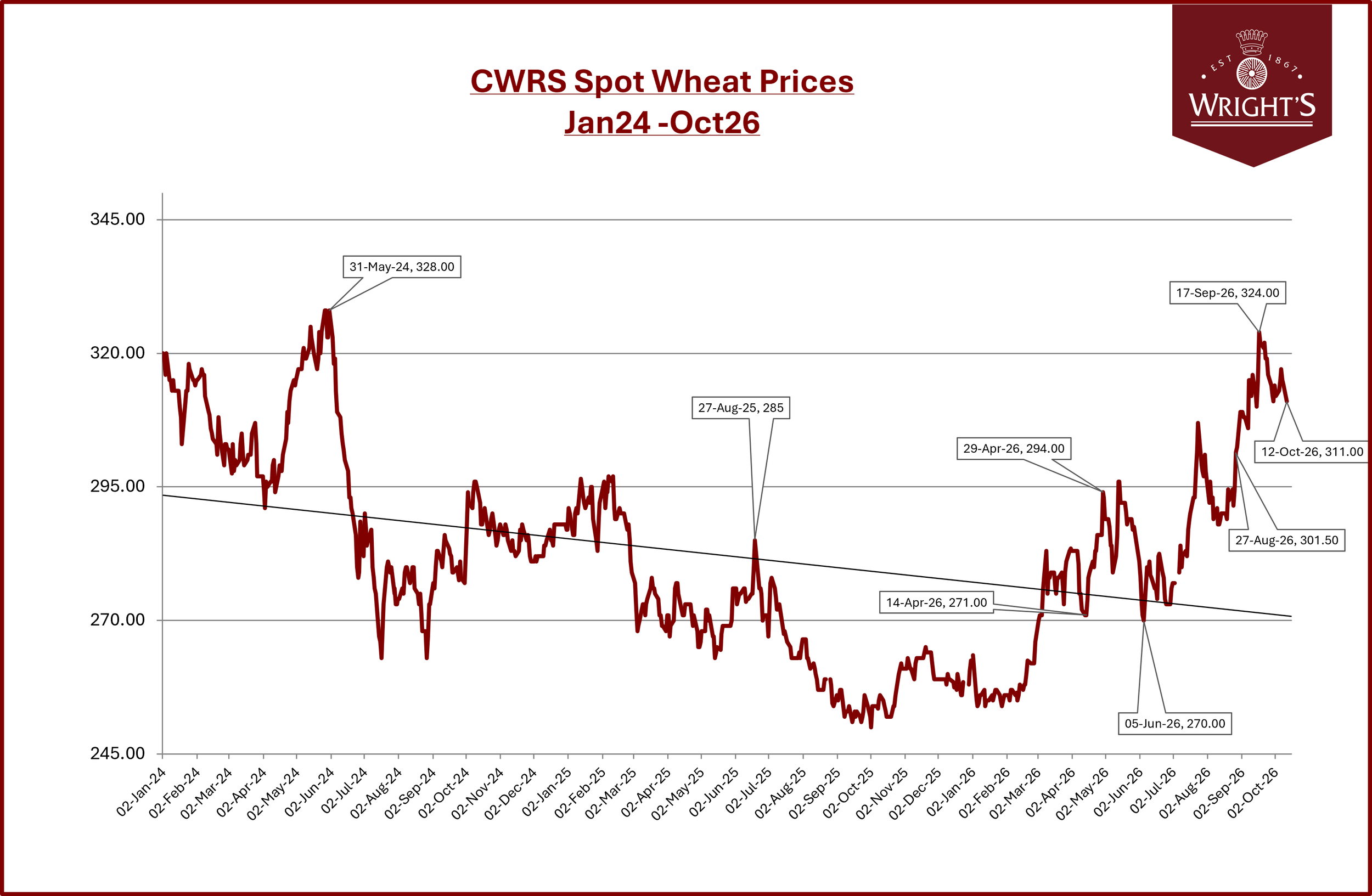
| CWRS 13.5% — Canadian, delivered (spot) | £294/t | £295/t | £296/t | +£1 |
| MATIF milling wheat — Dec-26 | €234.00/t | €228.00/t | €222/t | −€6.00 (−2.6%) |
| GBP/USD | 1.3380 | 1.3430 | 1.3497 | +0.0050 (+0.4%) |
| GBP/EUR | 1.1943 | 1.1993 | 1.1988 | +0.0050 (+0.4%) |
Market Drivers
Bullish Factors
Black Sea shipping crisis
Funds have already sold down significantly in Chicago
US corn export sales improve
December-26 corn and wheat futures oversold
Bearish Factors
Southern hemisphere harvest brings seasonal supply relief
Brazil’s real currency falls, boosting export competitiveness
Ukraine attempting to step up corn exports to Europe
Substantial scope for fund selling in Paris
Executive Summary
Wheat markets fell through the reporting week and have edged lower again this week. Global futures were pressured by improving supply prospects ; advancing US maize harvest, better Northern Hemisphere planting and rising Russian exports, alongside speculative selling, before steadying late in the week near important chart levels. With the November-2026 UK contract now in its final weeks and rolling off, We move to May-2027, which fell £5.50/t over the week to £202.50/t on 30 October and has since slipped to around £200/t.
UK Focus
May-27 fell £5.50/t (−2.6%) over the reporting week to £202.50/t on 30 October, steadied into the Friday close, and has since eased to about £200/t on 4 November, right on a key psychological level. The retiring Nov-26 contract closed at £192.75/t on 30 October. Sterling firmed to roughly $1.35 and €1.199 by early this week, its strongest against the euro since spring 2025, helped by the US mid-term results weakening the dollar; a firmer pound lowers the sterling cost of imported wheat and slightly blunts UK export competitiveness.
The domestic picture combines a tight balance sheet with outstanding quality. AHDB's first 2026/27 estimates put the UK wheat crop at 12.074 Mt which, with opening stocks of 1.5 Mt, gives availability of 13.6 Mt against forecast consumption of 13.979 Mt, a gap imports must fill, while barley is the tightest since 2012/13. The 2026 quality survey, released on 3 November, was exceptional: a record 79% of UK Flour Millers Group 1 samples met a typical milling specification, with protein and Hagberg Falling Numbers at series highs.
Global Focus
Chicago wheat (CBOT, the US benchmark futures market) and Paris milling wheat (MATIF, the Euronext European wheat market) both fell over the reporting week. May-27 Paris was down 2.3% and Chicago wheat off 3.1% before steadying near chart support late in the week, and Paris has since drifted toward the €225/t level. The market has been taking out its weather-risk premium: the US maize harvest reached about 70% complete by 25 October and more than three-quarters of the 2027 US winter wheat area was sown. Crude oil fell from the high $110s to around $102, which removed a prop, and the US mid-term elections took the dollar lower.
Supply news was mostly bearish. Russia is exporting more: vessels were cleared to leave the Sea of Azov for the first time since July and shipments are starting from the Arctic port of Murmansk, while the Baltic route still carries most cargoes around Black Sea disruption. Demand answered, though. Jordan, Tunisia and South Korea all bought or tendered, and US weekly wheat export sales came in at 850,000 t, well above the 200,000 to 500,000 t expected. The EU Commission cut its maize crop again, to 47.0 Mt. Argentina's early wheat yields are reported good and the Australian harvest is moving on.
Geopolitics is still the main swing factor. Russia, Ukraine and the United States are due to hold three-way talks in Abu Dhabi around 10 November, mediated by the US, and good headlines would keep the funds selling by taking risk premium out of the Black Sea. Attacks on shipping have continued. The US mid-term result, where the administration lost ground in Congress, has taken the dollar lower and raises questions over how much leverage Washington has on Chinese buying of US farm goods. Ukraine still expects its winter wheat area down about 18% this autumn, so next season's supply stays in view.
Week ahead. The Abu Dhabi talks around 10 November are the main thing to watch for the Black Sea risk premium, along with the dollar and US-to-China trade after the mid-terms. UK demand data lands on 5 November, with AHDB's human and industrial cereal usage and the GB animal feed figures, giving an early read on domestic use.
Imported wheat, delivered (£/t)
| Grade | 23 Oct | Latest 4 Nov | Change |
|---|---|---|---|
| German A 13% (breadmaking) | £254/t | £245/t | −£9 |
| German E 14% (premium breadmaking) | £278/t | £266/t | −£12 |
| French min 11% | £269/t | £258/t | −£11 |
| CWRS 13.5% (Canadian) | £294/t | £296/t | +£2 |